Naju Pets | June 1, 2026
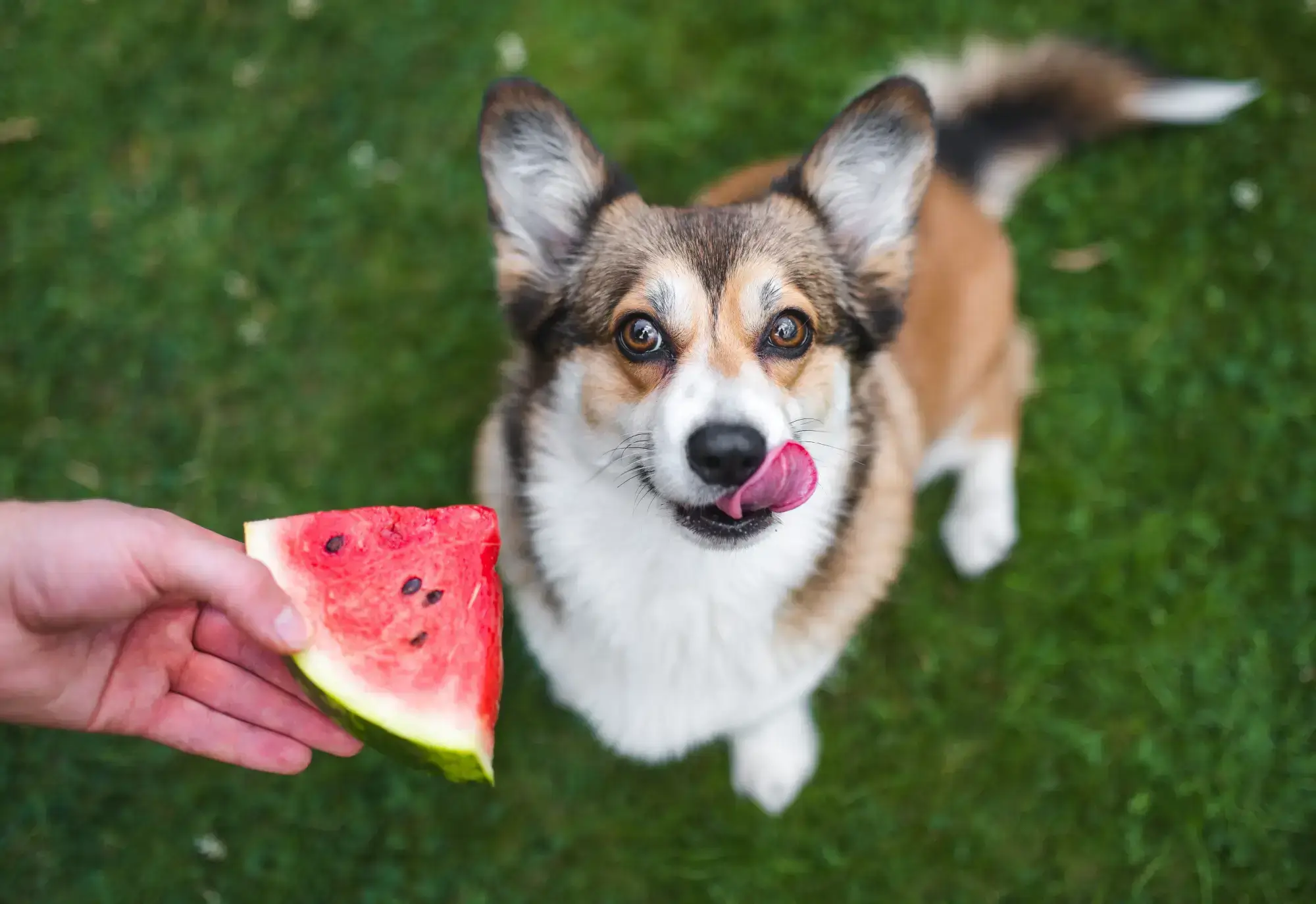
For a lot of pet parents, this question comes up in summer. You are cutting up cold watermelon on a hot Florida day, your dog is sitting nearby, and it feels natural to want to share a bite. That instinct makes sense. Watermelon is refreshing, juicy, and easy to think of as a harmless treat. Still, not every human food is automatically dog-friendly, which is why it helps to know what is safe before you offer any.
The good news is that watermelon is not toxic to dogs. When served plain, seedless, and without the rind, it can be a fun occasional treat for many dogs. The key is keeping portions small and treating it like a snack, not a regular part of their diet.
Quick Answer:
Yes, dogs can have watermelon in moderation, as long as it is prepared the right way. The soft, ripe flesh is the part that is generally safe to share. Seeds and rind should be removed first, since those parts can be harder for dogs to digest and may cause problems.
Is Watermelon Good for Dogs or Bad for Dogs?
Watermelon can be a good treat for dogs in small amounts, especially during hot weather. Its high water content can make it a refreshing snack on warm days. It also contains vitamins like A and C, which is one reason some pet parents like it as a simple seasonal treat.
Still, “good for dogs” can depend on the quantity and the parts served. Too much watermelon can upset a dog’s stomach because of the natural sugar and fiber. Like many treats, it is best in moderation rather than as a regular part of your dog’s diet.
A simple way to think about it is this: watermelon can be a safe choice for many dogs when it is prepared properly and served in moderation.
What Part of the Watermelon Can Dogs Eat?
When it comes to watermelon for dogs, the soft, ripe flesh is the safest part to share.
Watermelon flesh: Yes
Plain watermelon flesh is the part dogs can usually enjoy in small amounts as an occasional treat.
Watermelon seeds: Best avoided
It is a good idea to remove the seeds before offering watermelon to your dog.
Watermelon rind or skin: No
The rind is not something dogs should eat.
Yellow watermelon: Usually yes
Yellow watermelon is generally treated the same way as red watermelon. If it is plain, seedless, and served in small amounts, it can usually be shared the same way.
Keeping it simple like this can make it a lot easier to share watermelon safely without second-guessing every bite.
Can Dogs Eat Watermelon Seeds or Rind?
This is where a lot of pet parents pause, and for good reason. Even if watermelon itself can be a safe treat, the seeds and rind are the parts that are better left out.
Watermelon Seeds
A seed or two is not always cause for panic, especially for a larger dog, but seeds are still best avoided. They can be harder to digest, which is why it is safer to remove them before sharing watermelon.
Watermelon Rind
The rind is a little more concerning because it is thick, tough, and harder for dogs to chew and digest. A small bite doesn’t t always cause a problem, but too much rind can upset your dog’s stomach and may lead to issues if swallowed in larger pieces.
If your dog gets some rind or seeds, it is not necessarily an emergency. Still, it is a good idea to keep an eye out for signs like vomiting, diarrhea, low energy, belly discomfort, or trouble passing stool. If anything seems off or if you’re just unsure, it’s always a good idea to call your veterinarian for guidance.
How Much Watermelon Can a Dog Eat?
A little watermelon can go a long way. Even though it can be a refreshing treat, it should still stay a small part of your dog’s overall diet.
A simple rule of thumb is to match the portion to your dog’s size:
- Extra-small dogs (about 2 to 10 pounds): 1 to 2 tiny pieces
- Small to medium dogs (about 11 to 40 pounds): a few small chunks
- Large dogs (about 41 pounds and up): a small handful at most
You don’t need to overthink it. The main goal is to keep watermelon as an occasional treat, not something your dog is eating in large servings. In general, treats should make up no more than about 10% of your dog’s daily food intake.
If your dog has never had watermelon before, start with just a bite or two and see how they do. That way, you can share a fun summer treat without overdoing it.
Can Puppies Have Watermelon?
Puppies can have a very small amount of plain watermelon in some cases, but it’s best to be a little more careful than you would with an adult dog. Their stomachs are still adjusting, and new foods can be harder on them.
The biggest things to watch are portion size, texture, and how your puppy handles new treats. Watermelon should be seedless, rind-free, and cut into very small pieces that are easy to chew. Even with dog-safe foods, too much at once can lead to an upset stomach.
If you want to let your puppy try watermelon, start small. Offer just a tiny bite, then watch to make sure it agrees with them. If your puppy is very young, has a sensitive stomach, or is on a specific diet, it’s a good idea to check with your veterinarian before adding anything new.
When Watermelon Is Not a Good Idea for Dogs
Even safe treats are not the right fit for every dog. Watermelon may be something to skip, or at least check with your vet about first if your dog has diabetes, sugar sensitivity, or a prescription diet. In those cases, even a simple fruit treat can be more complicated than it seems.
It is also worth being more careful if your dog has a history of digestive upset. Some dogs can handle a small bite of watermelon just fine, while others end up with an unhappy stomach from even a little too much.
Another thing to think about is how your dog eats. If your dog tends to gulp food without chewing, watermelon may need extra caution since soft treats can disappear quickly. It is also probably not the best time to test a new food right before boarding, daycare, travel, or any change in routine. If your dog doesn’t tolerate it well, you do not want to discover that at the worst possible moment.
Easy Ways to Serve Watermelon to Dogs Safely
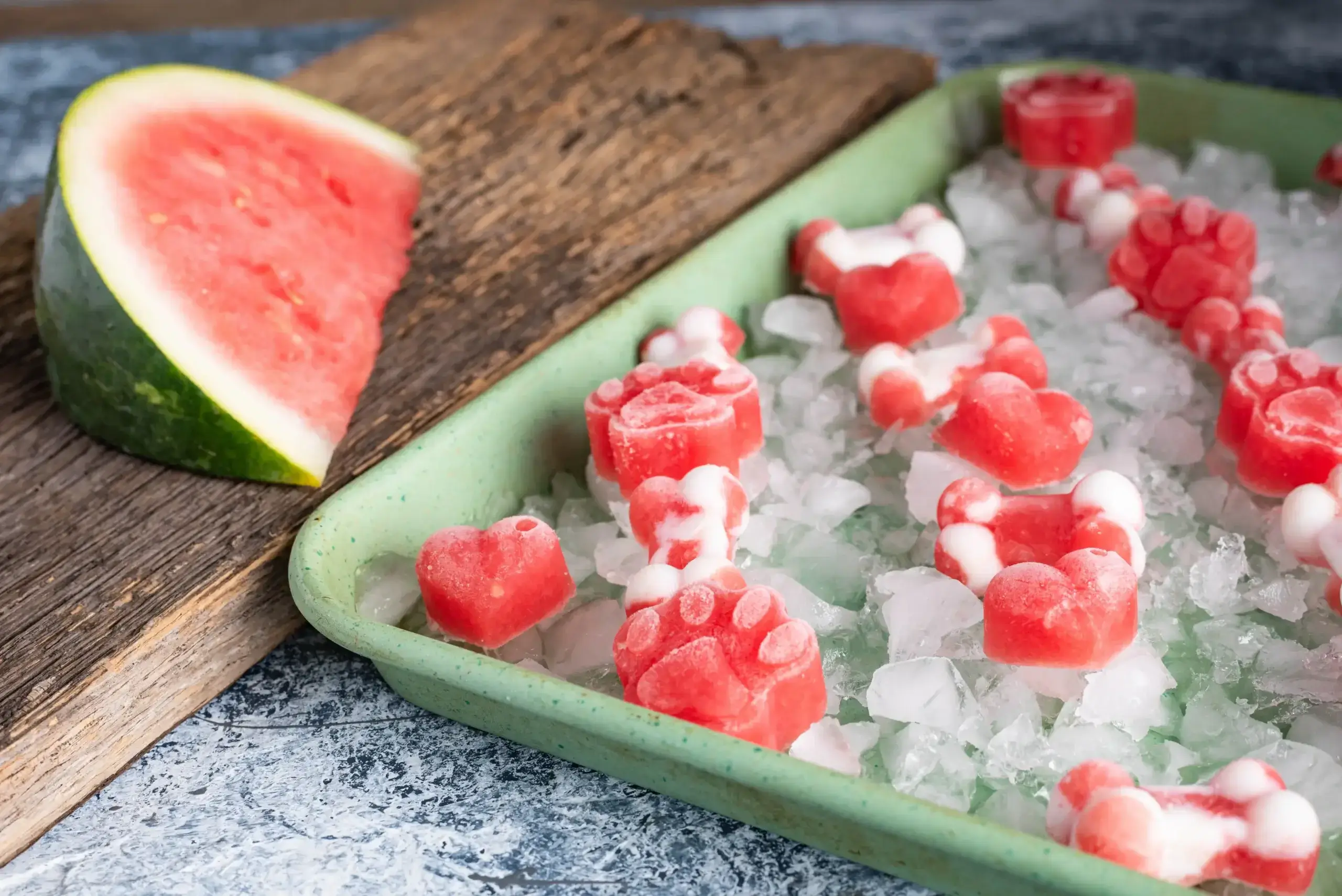
If your dog enjoys watermelon, keeping it simple is usually the best approach. Plain chilled cubes are an easy option for a quick summer treat. Frozen seedless chunks can also be a nice choice on a hot day, especially for dogs who like a colder snack.
You can also mash a small amount into a lick mat if your dog enjoys slower treat time. That can make it feel a little more special without turning it into too much at once. If you want to mix watermelon with anything else, stick with dog-safe ingredients that are plain and unsweetened.
What Fruits Are Safe for Dogs, and Which Ones Are Not?
Watermelon is not the only fruit dogs can enjoy, but that does not mean every fruit is safe to share. Some can be fine in small amounts, while others should be avoided completely.
A few general examples include:
- Often safe in moderation: apples without seeds, blueberries, strawberries, bananas, and seedless watermelon
- Use extra caution with: fruits that have large pits, tough skins, or a lot of natural sugar
- Do not give dogs: grapes and raisins, which are known to be toxic to dogs
If you are ever unsure about a fruit, it is always better to check before sharing. A quick question now can save you a lot of stress later.
A Little Thought Keeps It Fun
Sharing a little watermelon with your dog can be a fun part of summer, and the goal is not to overthink it. The main thing is just taking a little care with how you serve it and how much you offer.
Every dog is different, and that doesn’t have to make things complicated. A little thought can help make sure the treat stays fun, simple, and enjoyable for both of you.


