Naju Pets | May 15, 2026
If your dog gets itchy, red, or uncomfortable after being outside, it is natural to wonder if grass could be part of the problem. And honestly, that can feel frustrating. Dogs need outdoor time. They need to sniff, stretch, explore, and enjoy being dogs.
The good news is that a grass allergy or sensitivity does not usually mean your dog has to avoid the outdoors completely. In many cases, the goal is not total avoidance. It is learning how to manage exposure, reduce irritation, and help your dog feel better after contact with outdoor allergens.
In this guide, we’ll cover what grass allergies can look like in dogs, how to spot useful patterns, what to do after your dog has been in grass, and when it may be time to talk with your veterinarian.
Can Dogs Actually Be Allergic to Grass?
Yes, dogs can be allergic to grass. Just like people, dogs can react to things in their environment, and grass-related allergens are one of those possibilities.
That said, it is not always the actual blade of grass causing the problem. Many dogs react to grass pollen, plant particles, or other outdoor irritants that collect on their coat, paws, and skin. Some dogs may also develop irritation from direct contact with grass, especially on more sensitive areas of the body.
What Grass Allergies Look Like in Dogs
Grass allergies in dogs often show up through the skin. Some dogs have obvious irritation, while others show discomfort through small behavior changes that are easy to miss at first.
Skin and Coat Signs
You may notice:
- Red or irritated skin on the belly after lying in grass
- Small bumps or rash on the underside, legs, or groin area
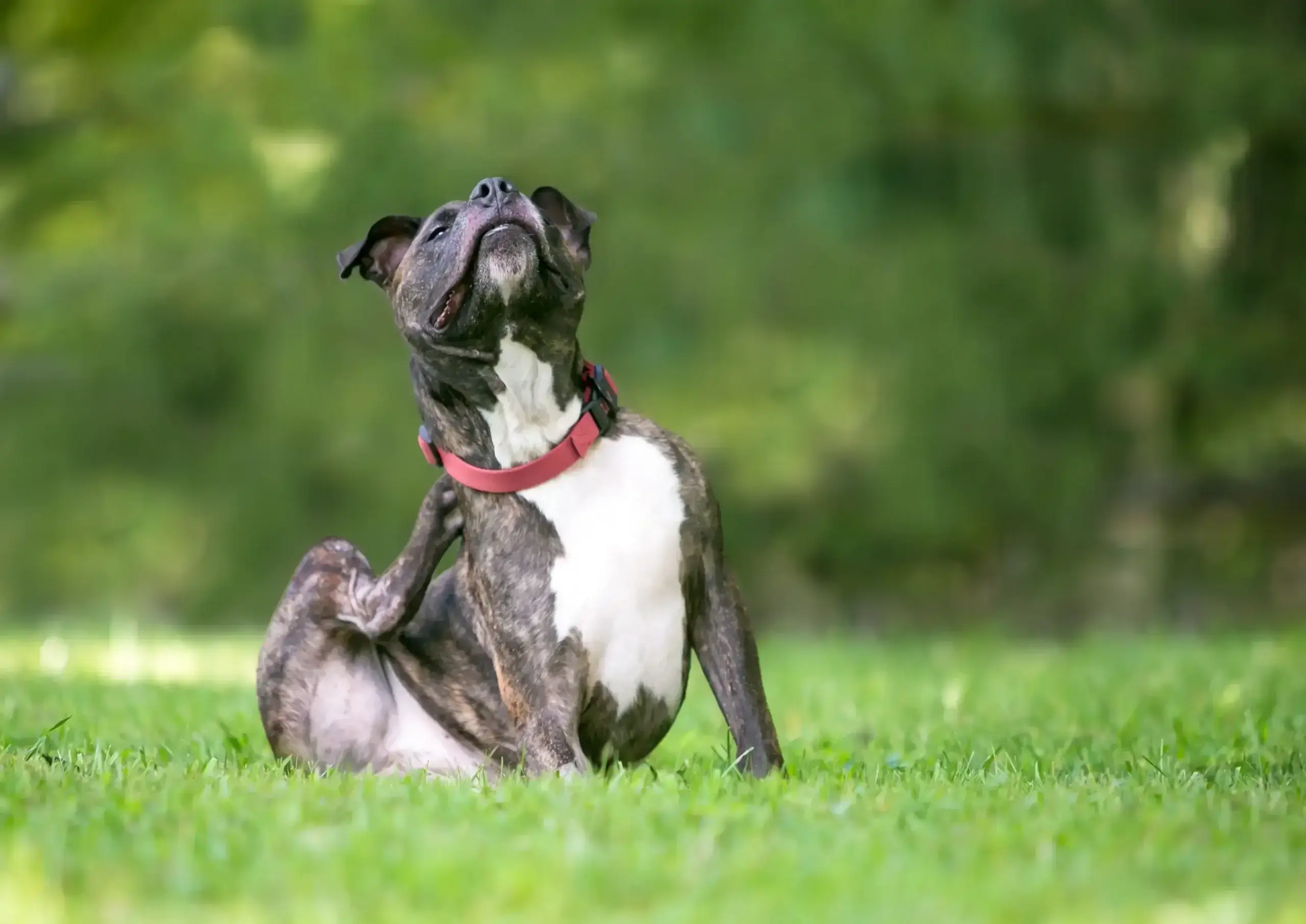
- Frequent scratching after outdoor time
- Hair thinning or irritation in spots your dog scratches often
A grass rash on a dog’s belly can be especially noticeable because that area often has the most direct contact with the ground.
Paw and Behavior Signs
Grass allergies can also show up through your dog’s paws and habits. Watch for:
- Licking or chewing paws after walks
- Rubbing their face on carpet, furniture, or bedding
- Restlessness after being outside
- Biting or chewing at legs, feet, or sensitive areas
These signs can be easy to miss because they may look like normal grooming or restlessness. The pattern matters.
Pattern-Based Clues
One of the best ways to tell whether grass may be involved is to look at when symptoms occur.
Grass allergies may be more likely if:
- Symptoms show up after walks, yard time, or park visits
- Irritation gets worse during spring, summer, or after mowing
- Your dog seems more comfortable after being indoors for a while
- Paw licking or belly irritation follows outdoor play
Noticing these patterns can help you understand what may be bothering your dog and give your veterinarian more helpful information if symptoms continue.
Is It Really a Grass Allergy or Something Else?
Not every itchy dog has a true grass allergy. Sometimes the issue is skin sensitivity, environmental irritation, fleas, food sensitivities, or even licking from boredom or stress.
That is why patterns matter. Food sensitivities, flea irritation, and environmental allergies can look surprisingly similar on the surface. The difference often comes down to timing, triggers, and whether symptoms improve when exposure changes.
If your dog has ongoing itching, hair loss, sores, or irritated skin that does not improve, it is best to check with your veterinarian. They can help determine what is actually causing the discomfort.
Why Grass Triggers Reactions in Some Dogs
Grass can bother sensitive dogs in more than one way.
Many people are surprised to learn that grass has pollen. Grass pollen is a fine powder released by grass that can travel through the air or settle onto your dog’s coat and skin. But pollen is not the only possible trigger.
Some dogs may also react to plant particles, dust, mold, lawn treatments, or other outdoor irritants. Freshly cut grass can be more irritating because mowing stirs up more of those particles and leaves clippings behind that can stick to fur and paws.
That is why two dogs can spend time in the same yard and react differently. One may be perfectly fine, while another may come inside itchy, red, or uncomfortable.
What to Do After Your Dog Has Been in Grass
If your dog has a grass sensitivity and still ends up in the grass, there is no need to panic. Dogs need outdoor time, and even careful pet parents cannot prevent every possible exposure.
What matters most is what you do afterward. A simple cleanup routine can help remove pollen, grass particles, and other irritants before they sit on your dog’s skin or get licked into their paws.
After-Outdoor Care Routine
- Wipe their paws: Use a damp cloth or pet-safe wipe to gently clean between the toes and paw pads.
- Rinse the belly and legs if needed: A quick rinse can help remove anything clinging to the skin or coat.
- Dry them thoroughly: Moisture can make irritation worse, especially around paws, belly, and skin folds.
- Check for irritation: Look for early signs of redness or discomfort before licking and scratching become a bigger cycle.
This routine doesn’t need to be complicated. The goal is simply to reduce what stays on your dog after outdoor exposure.
Can Dogs Still Go Outside If They’re Allergic to Grass?
When you find out your dog could be allergic to grass, it can feel like they have to stop being a dog. Grass is part of daily dog life: potty breaks, sniffing, exploring, and play.
Thankfully, that is usually not the case.
For most dogs, the goal is not to avoid grass completely. It is to make outdoor time easier on their skin by managing exposure, watching for flare-ups, and helping remove allergens afterward.
You may be able to reduce irritation by adjusting how and when your dog spends time outside:
- Shorter outdoor sessions during flare-ups: If your dog is extra itchy, shorter play sessions may be easier on their skin.
- Avoiding peak pollen times when possible: Some dogs do better when outdoor time is shifted away from times when pollen or allergens seem worse.
- Using different surfaces: Walks on sidewalks, paths, sand, or other non-grassy areas may help reduce direct contact.
- Being careful after mowing: Freshly cut grass can leave more particles and clippings behind, so sensitive dogs may need extra wiping or rinsing afterward.
When Grass Allergies Need More Than At-Home Care
A little redness or itching after outdoor exposure doesn’t always mean something serious is happening. The bigger concern is when the irritation keeps coming back, gets worse, or does not improve with simple care.
If your dog seems uncomfortable day after day, scratches enough to damage the skin, or cannot stop licking the same spots, it is time to talk with your veterinarian.
At-home care can help manage mild irritation, but ongoing skin problems need a proper diagnosis so you know what you are actually treating.
How Regular Grooming Helps Dogs With Grass Allergies
It is easy to think grooming only matters if your dog sheds a lot or needs frequent haircuts. But for dogs with skin sensitivities, grooming is not just about coat appearance.
Grooming does not cure grass allergies, but it can be a helpful part of managing comfort. Regular bathing and coat care may help:
- Wash away outdoor irritants before they sit on the skin too long
- Keep sensitive skin cleaner and more comfortable
- Reduce buildup that can contribute to licking or scratching
- Make it easier to notice irritated spots early
It is not a replacement for veterinary care if your dog has ongoing skin problems, but it can be a helpful part of their comfort routine.
Need Help Keeping Your Dog More Comfortable?
Grass sensitivities can be frustrating, but your dog’s care routine does not have to feel overwhelming. Regular grooming can be one helpful way to keep the coat cleaner, reduce outdoor buildup, and support sensitive skin between vet visits.
For pet parents in the Panama City, FL area, NaJu Pets offers dog grooming services with bathing, coat care, and skin-friendly add-on options.
Schedule dog grooming in Panama City, FL with NaJu Pets and ask about grooming options for dogs with sensitive skin.